
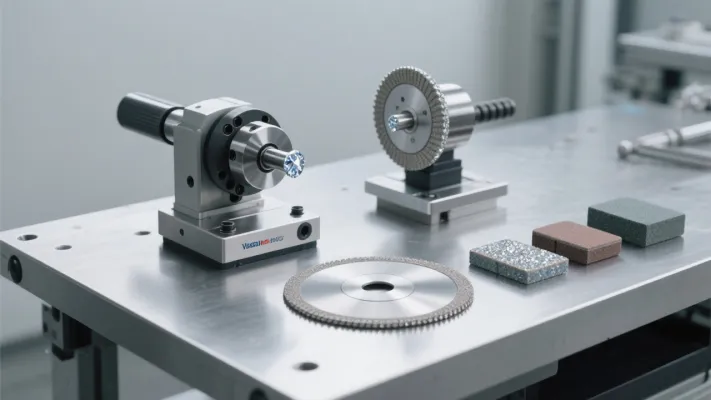
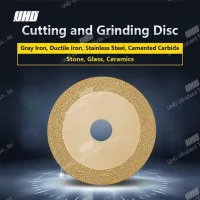
In the precision grinding of difficult-to-machine materials such as cemented carbide, ceramics, and glass, the selection of brazed diamond grinding tools directly affects efficiency and safety. This guide will help you understand the key factors in tool selection and make informed decisions.
Different materials have unique physical characteristics that pose specific challenges during grinding. For example, cemented carbide is extremely hard and wear - resistant, requiring grinding tools with high - strength and sharp cutting edges. Ceramics are brittle and prone to cracking, so tools need to provide precise control during the grinding process. Glass is a non - metallic material with low thermal conductivity, and the grinding process needs to avoid overheating to prevent damage.
Here is a material - tool对照表 (Material - Tool Comparison Table):
| Material | Tool Requirements |
|---|---|
| Cemented Carbide | High - strength, sharp cutting edges |
| Ceramics | Precise control, anti - cracking design |
| Glass | Heat - resistant, prevent overheating |
The diameter of the grinding tool ranges from 100 - 180mm. A larger diameter is suitable for large - area planar cutting, while a smaller diameter is more flexible for detailed processing. The shape of the tool can be either planar or curved. Planar tools are ideal for flat surface grinding, and curved tools are used for complex surface processing.
The wear - resistance grade is closely related to the material being processed. For hard materials, a higher wear - resistance grade is required to ensure the tool's service life. For example, when grinding cemented carbide, a tool with a high - wear - resistance grade can significantly reduce tool replacement frequency.
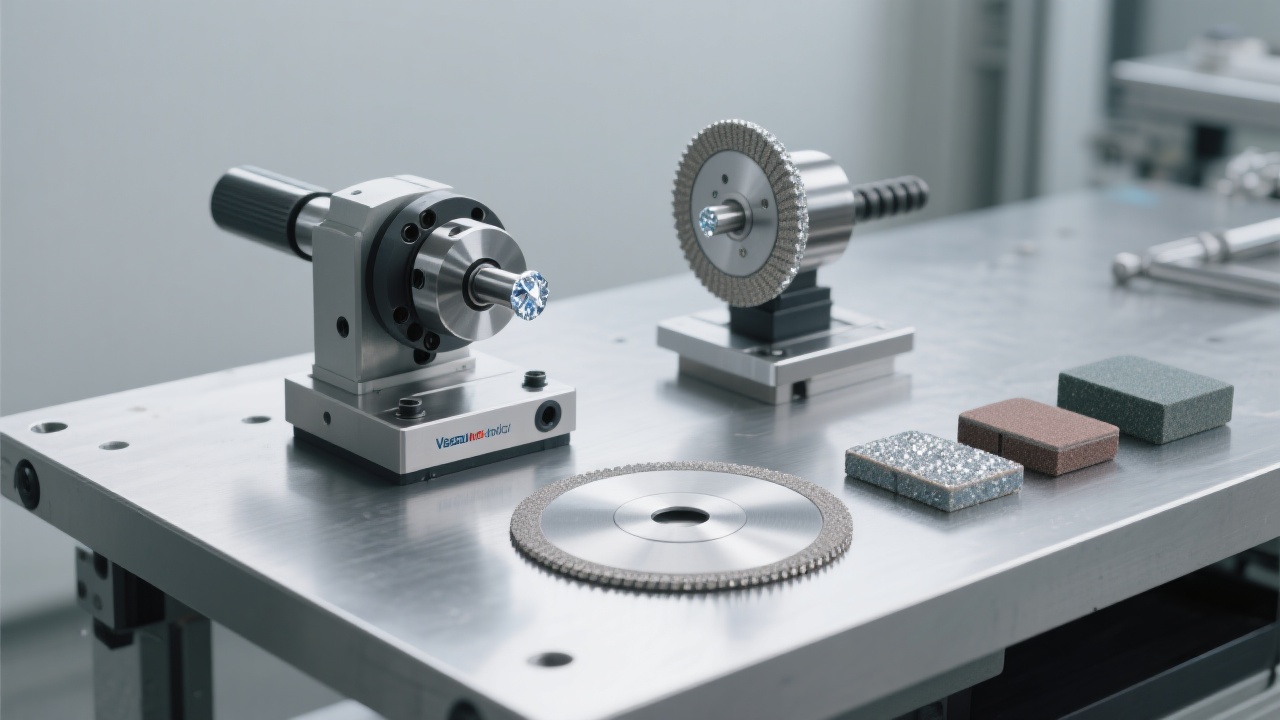
In high - precision curved surface grinding, a small - diameter, high - precision curved tool is recommended. This type of tool can accurately follow the curve of the workpiece and ensure high - quality surface finish. For large - volume planar cutting, a large - diameter planar tool can improve processing efficiency.
You can visually judge the wear degree of the tool. When the cutting edge becomes dull or the diamond falls off, it's time to replace the tool. The cutting speed should be matched with the diamond concentration. A higher diamond concentration allows for a higher cutting speed, but it also requires more power.
Size tolerance is an important factor in tool quality. The tool should meet the specified size requirements to ensure accurate processing. Manual measurement standards can be used to verify the size. Anti - chipping design verification is also crucial. A well - designed tool can prevent chipping during the grinding process, improving safety and efficiency.
Some common failure cases include rapid tool wear, tool chipping, and poor surface finish. By analyzing these cases, you can find the root causes and take corresponding optimization measures. For example, if the tool wears out quickly, it may be due to an inappropriate wear - resistance grade or incorrect cutting parameters.
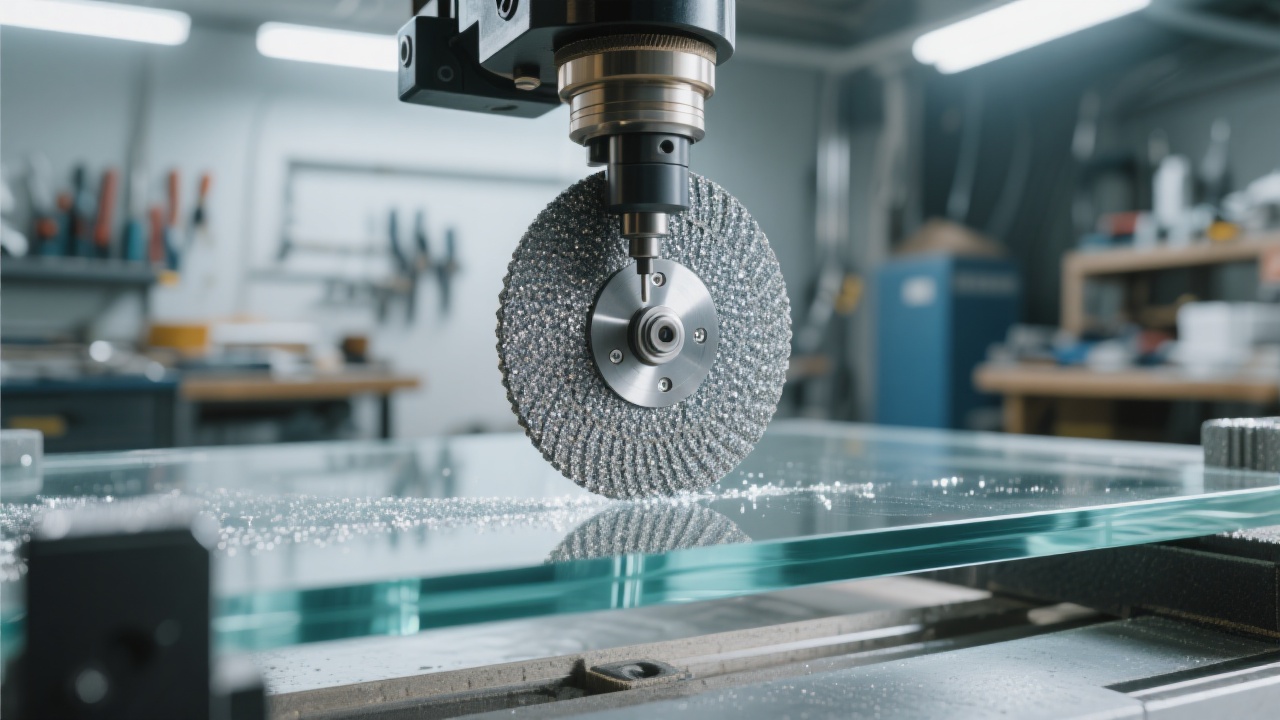
Your workpiece belongs to which category? Click to find the most suitable tool for your needs!
Choosing Youde is not just about buying tools; it's an investment in stable production efficiency. Explore Our Brazed Diamond Grinding Tools Now!


 429
|
429
|
 brazed diamond grinding wheels
precision ceramic machining
superhard abrasive technology
diamond grinding disc applications
Youde Superhard Tools
318
|
Brazed diamond grinding tools
High - intensity grinding solutions
Diamond grinding disc selection
Super - hard material processing technology
Wear - resistant grinding tools
brazed diamond grinding wheels
precision ceramic machining
superhard abrasive technology
diamond grinding disc applications
Youde Superhard Tools
318
|
Brazed diamond grinding tools
High - intensity grinding solutions
Diamond grinding disc selection
Super - hard material processing technology
Wear - resistant grinding tools
 165
|
Brazed Diamond Grinding 100
high-strength grinding tool
diamond grinding technology
superhard tool application
wear-resistant grinding disc
102
|
brazed diamond grinding tools
high-precision grinding solutions
industrial grinding innovation
diamond grinding tool durability
precision machining applications
396
|
brazed diamond grinding tools
high-intensity machining
durable abrasive tools
gray cast iron processing
cemented carbide grinding
165
|
Brazed Diamond Grinding 100
high-strength grinding tool
diamond grinding technology
superhard tool application
wear-resistant grinding disc
102
|
brazed diamond grinding tools
high-precision grinding solutions
industrial grinding innovation
diamond grinding tool durability
precision machining applications
396
|
brazed diamond grinding tools
high-intensity machining
durable abrasive tools
gray cast iron processing
cemented carbide grinding






.png?x-oss-process=image/resize,m_fill,h_300,w_300/format,webp)


