Brazed Diamond Grinding Tools: Breakthroughs for High-Intensity Grinding Efficiency and Longer Tool Life
2026-02-16
Technical article
This article examines recent technical breakthroughs in brazed diamond grinding tools for high-intensity grinding operations, focusing on how advanced brazing processes enhance grain retention, heat resistance, and overall cutting aggressiveness. By analyzing tool architecture, diamond exposure, and bond integrity, it explains why brazed designs can deliver higher material removal rates and more stable performance than conventional resin or electroplated alternatives. Practical application insights are provided for demanding materials such as gray cast iron, ductile (nodular) iron, and stainless steel, highlighting how improved wear resistance and extended service life translate into measurable productivity gains. The discussion also reflects the engineering philosophy and professional service capabilities of Henan Youde Superhard Tools Co., Ltd., offering a technically grounded reference for engineers and procurement decision-makers seeking optimized tool selection for specific workpiece conditions and production targets.
Brazed Diamond Grinding Breakthrough: Higher-Intensity Removal Without Sacrificing Tool Life
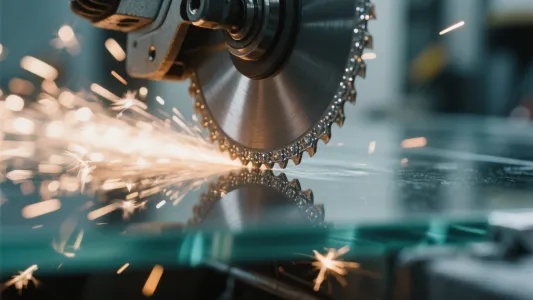
In heavy-duty grinding, the real bottleneck is rarely the machine. It is the tool’s ability to keep sharp, stay cool, and hold abrasive particles securely under continuous load. Brazed diamond grinding tools have shifted that balance: by metallurgically bonding diamond to the substrate, they push removal rates higher while keeping wear predictable—especially on cast irons and hard-to-machine alloys.
This article explains the core brazing mechanism, what it changes in real workshops, and how engineers and procurement teams can select the right brazed diamond solution for gray iron, ductile iron, and stainless steel—backed by practical reference data and decision-ready comparisons.
brazed diamond grinding
high-intensity grinding tools
wear-resistant cutters
removal rate improvement
superabrasives
Why Brazing Changes the Rules: A Structural View, Not a Marketing One
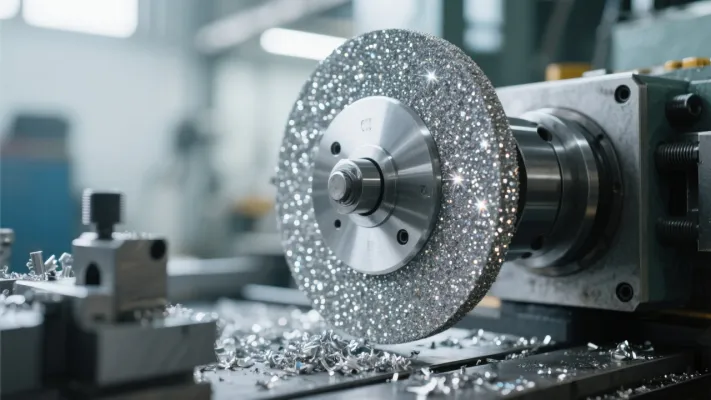
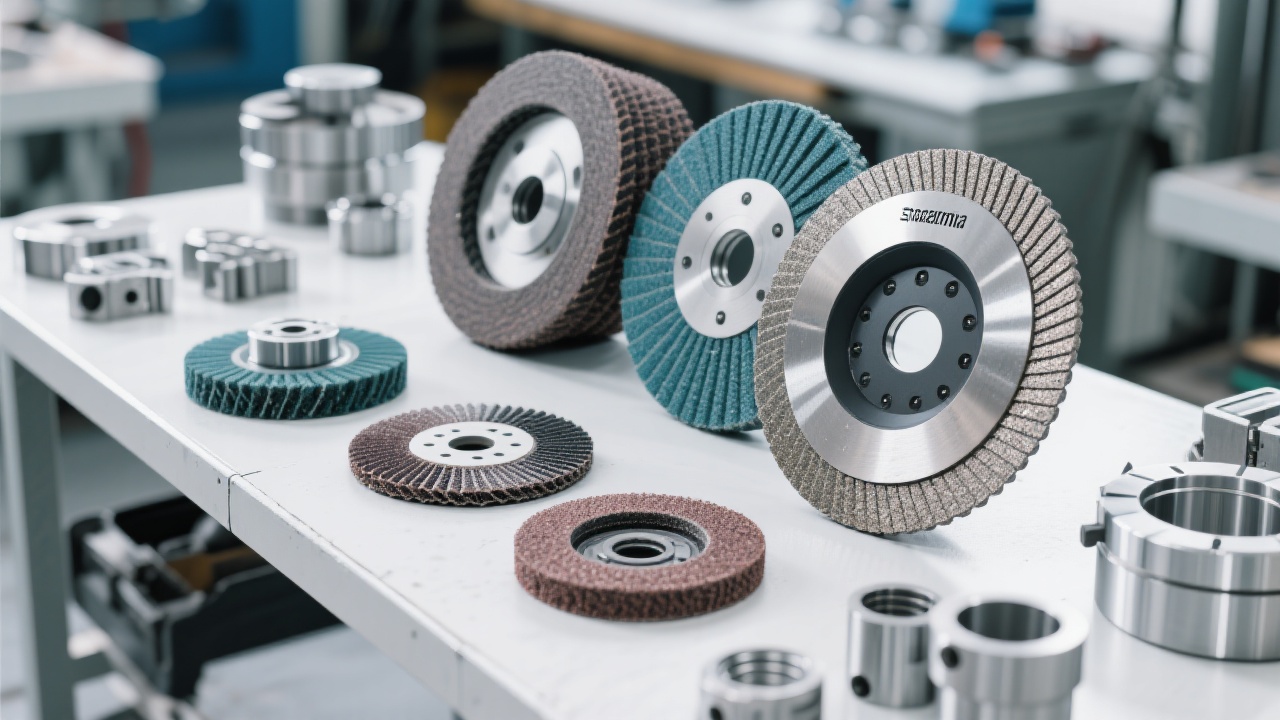
Conventional plated diamond tools rely on mechanical retention: diamonds are trapped by a relatively thin nickel layer. Under high tangential forces and thermal cycling, that layer can fatigue; diamonds can pull out before they truly wear down. Brazed diamond grinding tools use a metallurgical bond—a brazing alloy wets the diamond surface and the steel body, creating a stronger anchoring “bridge” around each grain.
What a Brazed Bond Typically Delivers (Reference Ranges)
| Performance factor |
Electroplated diamond (typical) |
Brazed diamond (typical) |
What it means on the shop floor |
| Grit protrusion |
~20–35% of grain size |
~50–70% of grain size |
More chip space, freer cutting, less glazing |
| Grain holding strength |
Moderate |
High (metallurgical wetting) |
Lower pull-out at high load; stable cutting edge |
| Typical tool life (vs plated) |
Baseline |
~2× to 5× |
Fewer tool changes; reduced downtime and variance |
| Removal rate potential |
Medium |
High (~20–60% gain) |
Higher MRR at similar power; shorter cycle time |
Reference ranges vary with diamond grade, brazing alloy, grit size, tool geometry, coolant, and workpiece metallurgy.
The key is not “harder bond” alone—it is controlled exposure of diamond cutting edges with enough clearance for swarf evacuation. That is why brazed diamond tools can keep cutting aggressively in the same pass where plated tools begin to load up and polish.
High-Intensity Grinding: Where Efficiency Is Won or Lost
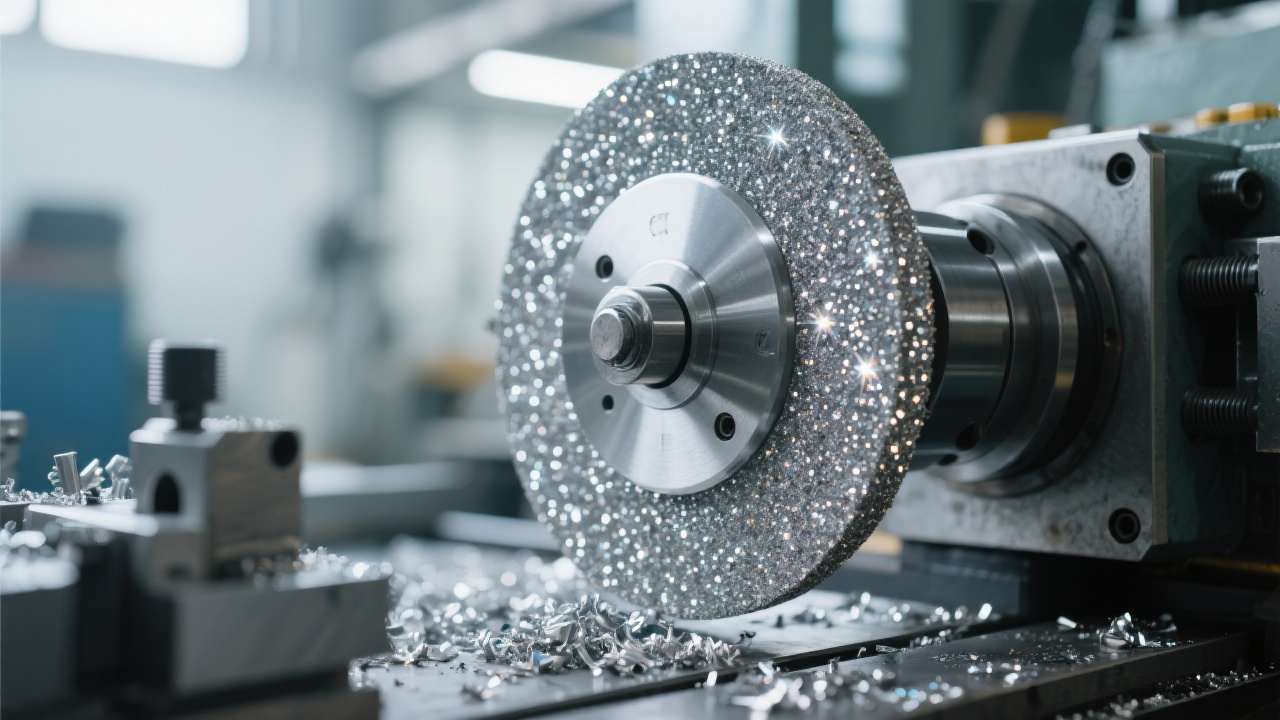
When a grinding process turns “high intensity,” three failure modes show up quickly: heat, loading, and premature abrasive loss. Brazed diamond tools address all three with a combination of bond strength and open chip pockets. In practice, users often report:
- Lower grinding forces at the same stock removal, because exposed diamond edges cut rather than rub.
- More stable surface finish over tool life, since grains are less likely to pull out early.
- Less wheel loading in gummy or mixed-structure materials, improving consistency shift-to-shift.
A Practical KPI Set for Procurement & Process Engineers
Instead of comparing tools only by unit cost, evaluate: MRR (mm³/s), parts per tool, downtime per 1,000 parts, rework rate, and power draw stability. In many plants, a 10–20% cycle-time reduction outweighs the tool cost difference within weeks.
Material-by-Material Advantages: Gray Iron, Ductile Iron, Stainless Steel
1) Gray Cast Iron (GJL): Fast Stock Removal, Less Smearing
Gray iron’s graphite flakes help machining, but grinding still demands an abrasive layer that stays open. Brazed diamond tools typically maintain chip flow better at higher feed rates, helping reduce “polishing” behavior on worn abrasives. In production grinding of cast components, it is common to target 20–40% higher throughput after parameter optimization, while keeping stable edge integrity.
2) Ductile Iron (GJS): Tougher Matrix, Higher Force—Bond Strength Matters
Ductile iron is mechanically tougher than gray iron, with nodular graphite and a stronger matrix. That toughness can increase tangential forces and accelerate grain pull-out in weaker bonds. The brazed structure’s higher holding strength helps keep diamonds working to true wear, which is why many users see 2× to 4× tool life improvements in heavy grinding and edge conditioning tasks.
3) Stainless Steel: Heat, Loading, and the Need for a “Free-Cutting” Tool
Stainless steel can be unforgiving: it work-hardens, retains heat, and can load the abrasive surface. A brazed diamond layer with high protrusion creates larger chip pockets and reduces rubbing. In real-world trials, switching from conventional abrasive setups to optimized brazed diamond grinding solutions can reduce burn risk and help achieve more stable Ra targets—especially in edge prep, deburring, and controlled stock removal.
How to Select the Right Brazed Diamond Grinding Tool (Without Guesswork)
Selection should start from the process goal—cycle time, finish, or tool life—and then back-calculate grit size, diamond concentration, brazed layer height, and tool geometry. Below is a decision-friendly guide that engineers can use in RFQs and trial plans.
Fast Selection Matrix (Field-Proven Logic)
If the priority is maximum removal rate: choose a coarser grit (e.g., 30/40 to 40/50), higher protrusion design, and ensure sufficient coolant flow. Typical parameter tuning yields +20–60% MRR compared with conservative setups.
If the priority is balanced finish + productivity: mid grit (e.g., 50/60 to 80/100) often delivers stable Ra while keeping cycle time competitive—ideal for consistent cast surfaces and mixed batches.
If the priority is edge integrity / controlled stock removal: finer grit (e.g., 100/120+) with geometry optimized for contact stability helps reduce chatter marks and supports predictable deburring.
Note: Exact grit selection depends on spindle power, wheel speed, contact length, and whether the operation is dry or wet. A short A/B trial (10–30 parts) is usually enough to lock the tool specification.
A Data-First Look at ROI: Where Longer Life Converts to Real Output
Tool life is not an abstract metric. Each tool change introduces stoppage, measurement, redressing, and variability. In batch production, a longer-lasting brazed diamond tool often improves throughput even when operators keep the same machine parameters.
Reference Scenario (Illustrative, Common in Industrial Lines)
| Metric |
Baseline tool |
Brazed diamond tool |
Operational impact |
| Parts per tool |
300 |
900 |
2 fewer changeovers per 900 parts |
| Tool change time |
12 min |
12 min |
Saves ~24 min per 900 parts |
| Average cycle time |
75 sec |
60 sec |
~20% faster throughput after tuning |
| Rework rate (burn/finish issues) |
2.0% |
1.0% |
More stable cutting, less thermal damage |
These numbers are representative of outcomes reported in heavy grinding upgrades; actual results depend on line discipline and parameter optimization.
What Buyers Ask (and What Actually Matters in Verification)
Will brazed diamond tools always outlast electroplated tools?
In high-load, high-heat, or long-contact applications, brazed tools typically show a clear advantage because diamond pull-out is reduced. In very light-duty finishing, the gap can narrow. The best practice is to compare parts-per-tool and MRR in a controlled A/B run.
How should a factory validate performance quickly?
Run 10–30 parts under stable settings, record spindle power trend, part temperature/burn marks, cycle time, and surface finish. A strong brazed diamond tool typically keeps power draw more stable over time, indicating sustained sharpness.
What information should be included in an RFQ?
Material grade, hardness range, operation type (roughing/finishing/deburring), target Ra, coolant condition, spindle speed, contact length, and current pain points (loading, burn, fast wear). With these, a supplier can recommend grit size, concentration, and geometry with much higher accuracy.
Why Henan Youde Superhard Tools Co., Ltd. Fits High-Stakes Grinding Projects
For production lines, reliability is built from repeatable manufacturing and fast technical feedback. Henan Youde Superhard Tools Co., Ltd. focuses on superabrasive tool engineering with a practical mindset: stable brazing quality, application-driven tool design, and support that speaks the language of process control—MRR, tool life, finish stability, and total cost per part.
When the goal is to grind harder, faster, and longer—without gambling on inconsistency—this combination of technical depth and execution discipline becomes a real advantage for both engineers and procurement teams.
Ready to Upgrade High-Intensity Grinding with Brazed Diamond Tools?
Share your workpiece material, process goal, and current tool issue—get a matched brazed diamond grinding recommendation and a trial plan that targets measurable gains in removal rate and tool life.
Request a Brazed Diamond Grinding Tool Recommendation & Trial Support
Typical response includes suggested grit range, tool geometry options, and verification metrics for your line.



.png?x-oss-process=image/resize,m_fill,h_300,w_300/format,webp)


.png?x-oss-process=image/resize,m_fill,h_300,w_300/format,webp)