Brazed Diamond Grinding Tools: Working Principle and High-Efficiency Carbide Grinding Guide
2026-02-24
Technical knowledge
This article explains how brazed diamond grinding tools achieve efficient, stable, and safer material removal—especially in hardmetal (tungsten carbide) machining—by detailing the brazing mechanism that locks diamond grits to the tool body with high bond strength and improved grit protrusion. It compares brazed tools with electroplated and sintered alternatives in terms of wear resistance, impact tolerance, thermal stability, and service consistency. For gray iron, ductile iron, stainless steel, ceramics, and other difficult materials, it provides selection logic and practical parameter-optimization ideas (grit size, concentration, bond design, cutting speed, feed, coolant strategy) to reduce premature wear, chipping, and glazing. Real shop-floor scenarios for flat and contoured surface grinding are used to highlight operating checkpoints, common failure modes, troubleshooting steps, and maintenance routines that extend tool life and lower changeover frequency. Aligned with smart manufacturing and greener production goals, the guide also shows how standardized process control and correct tool usage can lift line-level efficiency—while reinforcing the brand message: Choose YODE brazed diamond grinding tools to make every cut more reassuring.
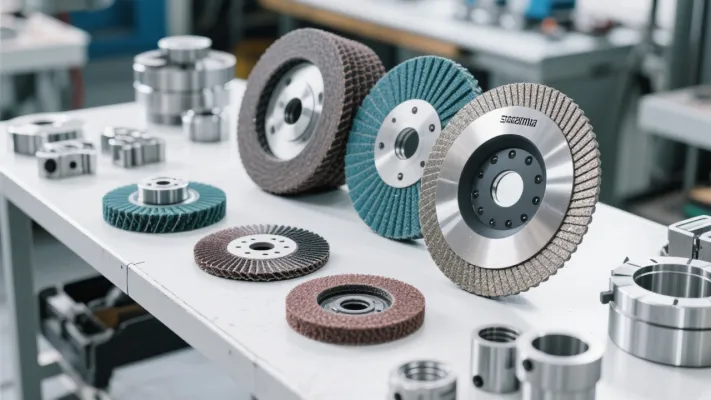
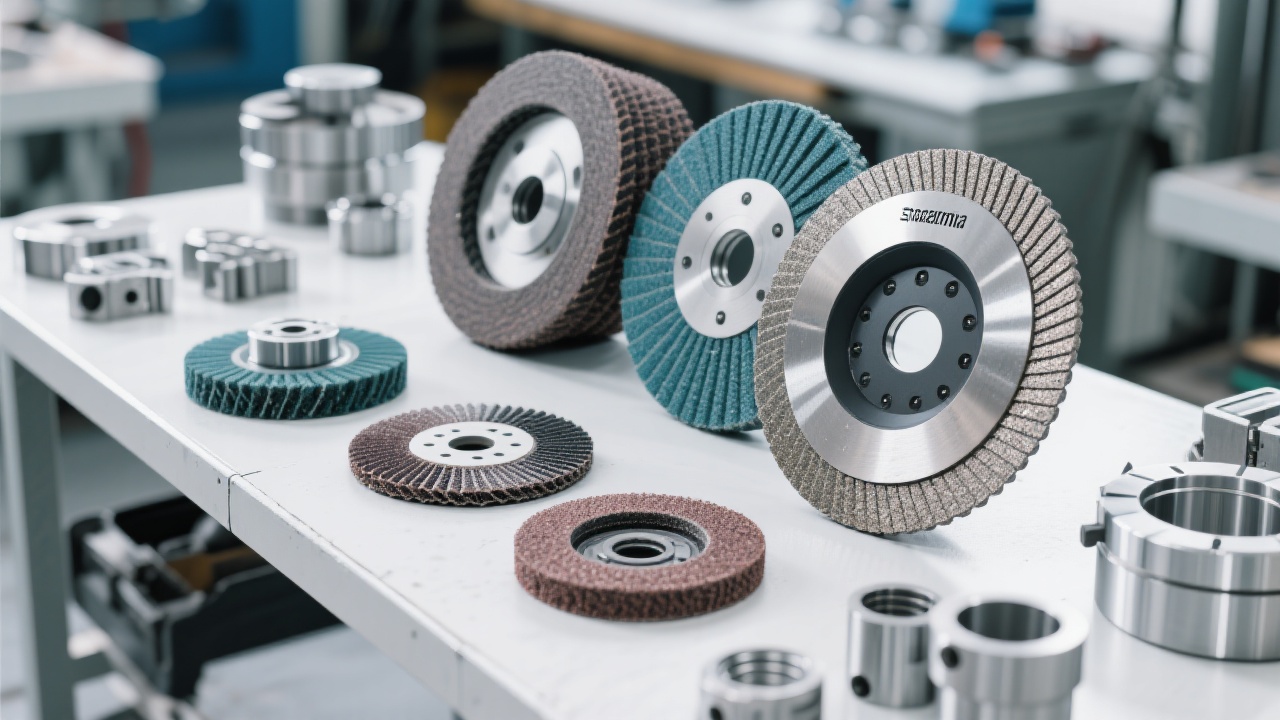
Brazed Diamond Tools Explained: How They Grind Carbide Faster, Safer, and with Fewer Tool Changes
In high-load grinding—especially on hardmetal (tungsten carbide), ceramics, and wear-resistant cast irons—the “tool” is often the hidden bottleneck. Brazed diamond tools stand out because they hold diamond grit with metallurgical strength rather than relying on thin plating or brittle sintered bonds. The result is a more predictable cutting action, higher impact tolerance, and a longer effective life before the tool becomes dull or sheds abrasive.
1) What Makes a Brazed Diamond Tool Different?
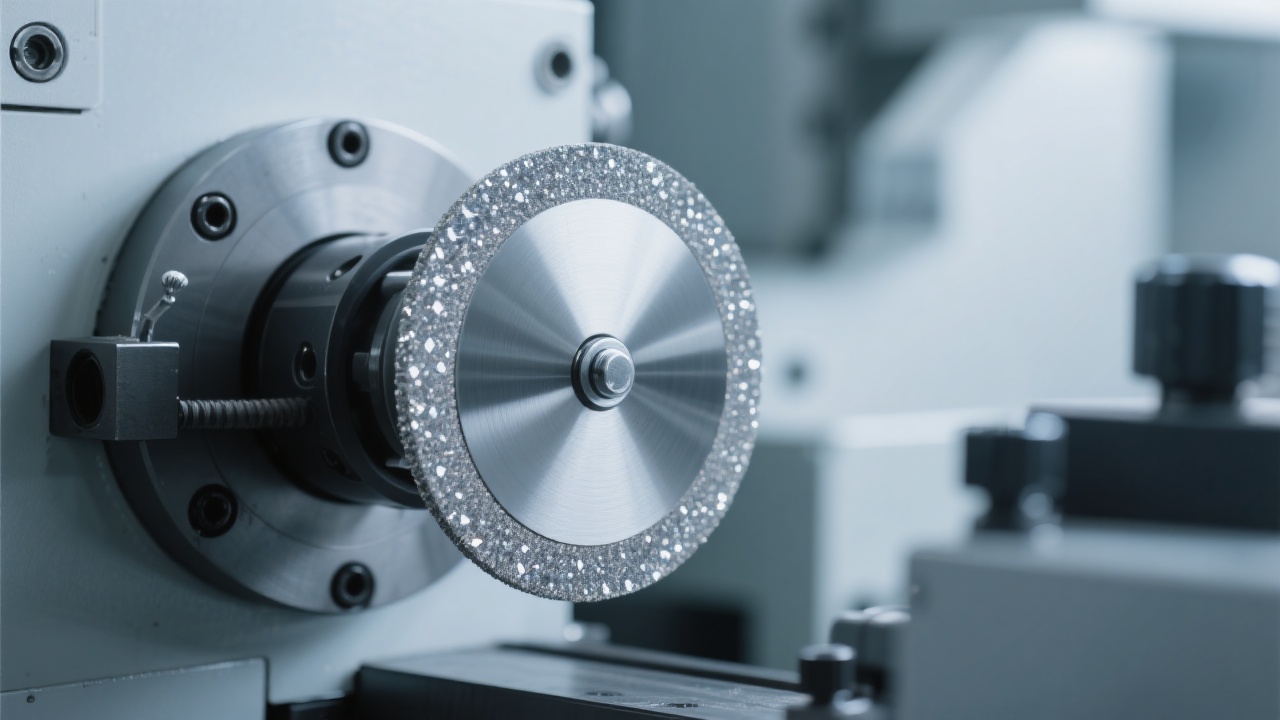
Brazing creates a true metallurgical bridge between diamond particles and the steel (or alloy) body. Unlike electroplated tools—where nickel mainly “wraps” grit—brazed tools use a filler alloy that wets the diamond surface and anchors each particle in a 3D bond layer.
In practical shop terms, this bond layer changes how the wheel behaves under stress: it holds grit longer at high tangential forces, stays stable under thermal swings, and keeps the cutting edges exposed instead of quickly “glazing” over.
At-a-glance: Brazed vs. Plated vs. Sintered (Typical Shop Reality)
| Process |
Grit Retention |
Impact Tolerance |
Best Use |
Common Limitation |
| Brazed |
High (metallurgical bonding) |
High (handles shock + interruption) |
Carbide, ceramics, cast irons; aggressive removal |
Requires correct parameters to avoid thermal overload |
| Electroplated |
Medium (single-layer, thin bond) |
Medium-Low |
Light finishing, profiling, low shock |
Fast grit loss; short effective life under load |
| Sintered |
Medium-High (matrix holds grit) |
Medium |
Stable long runs, controlled wear |
Can glaze; needs dressing; less “bite” initially |
Reference ranges in typical production: brazed tools often deliver 1.5×–3× longer effective cutting life than plated tools in heavy grinding, and can reduce tool change frequency by ~20%–40% when parameters and coolant are optimized.
The Core Mechanism: Strong Hold + Controlled Exposure
Performance comes from two balanced outcomes: (1) the brazed layer prevents early pull-out (grit stays), and (2) the tool geometry maintains chip space so fresh cutting points remain exposed. When either is neglected—too little chip clearance, too high pressure, wrong coolant—heat spikes, diamonds can micro-fracture, and the tool “feels dead” long before it’s truly worn out.
2) Material-Based Selection Logic (What Engineers Actually Need)
The biggest mistake in brazed diamond tool selection is focusing only on grit size. In production grinding, you’re matching material thermal behavior, chip formation, and surface integrity requirements to the tool’s aggressiveness and stability.
Recommended Starting Points (Adjust After First 30 Minutes)
| Workpiece |
Primary Need |
Suggested Grit |
Notes (Selection & Setup) |
| Tungsten carbide (hardmetal) |
High removal + edge stability |
D46–D107 |
Use stable coolant; avoid dwell; keep chips evacuating |
| Gray cast iron |
Anti-clog + shock tolerance |
D60–D126 |
Prioritize chip room; use moderate pressure to avoid chatter |
| Ductile iron |
Consistent finish, less vibration |
D46–D91 |
Watch heat; ductile grades can smear if feed is too low |
| Stainless steel |
Heat control, burr risk |
Often CBN preferred; if diamond is used, test carefully |
Use strong coolant; avoid dry grinding; validate chemistry compatibility |
| Ceramics (Al₂O₃ / SiC / zirconia) |
Fracture control + finish |
D15–D64 |
Light passes; avoid impact; keep contact stable |
Typical shop optimization target: reduce grinding temperature peaks by 15%–30% (coolant + feed tuning), which often translates into a visibly lower burn risk and more stable tool life.
Parameter Tuning: Safe Starting Ranges (Field-Proven)
Because machines vary widely, these are conservative starting points engineers use to get stable cutting first, then push productivity:
- Surface speed: 18–35 m/s for most brazed diamond wheels; start at ~22–28 m/s when heat sensitivity is high.
- Downfeed (plunge/step): 0.005–0.03 mm per pass for finishing; 0.03–0.10 mm for roughing where rigidity allows.
- Cross feed / traverse: keep chip evacuation continuous; avoid “polishing passes” that create dwell heat.
- Coolant: flood coolant is the default; aim for consistent delivery into the contact zone (not just “wetting” the surface).
The most reliable KPI is not “spark count,” but amperage stability: when grinding current stays steady (without sudden spikes), grit is cutting rather than rubbing—meaning better surface integrity and longer diamond life.
3) Real-World Scenarios: Flat Grinding vs. Curved Surfaces
Scenario A: Flat Surface Grinding (Carbide Wear Plates)
The production goal is usually straightforward: remove stock fast without burning binder phases or causing micro-chipping along edges. In brazed diamond grinding, the highest risk is local overheating from dwell or uneven wheel contact.
Engineer’s Note (Field Quote)
“If the wheel sounds quieter but amperage climbs, it’s not getting better—it’s glazing. Increase chip space (feed strategy), refresh the contact, and verify coolant hits the exact contact line.”
A practical approach is to run an initial 20–30 minute “stability window” and log: removal rate (g/min or mm³/s), current draw, and part temperature. Teams that do this consistently often see 10%–25% cycle-time reduction simply by eliminating the two main wastes: spark-out dwell and underfeeding.
Scenario B: Curved Surface Grinding (Contours, Radii, and Dies)
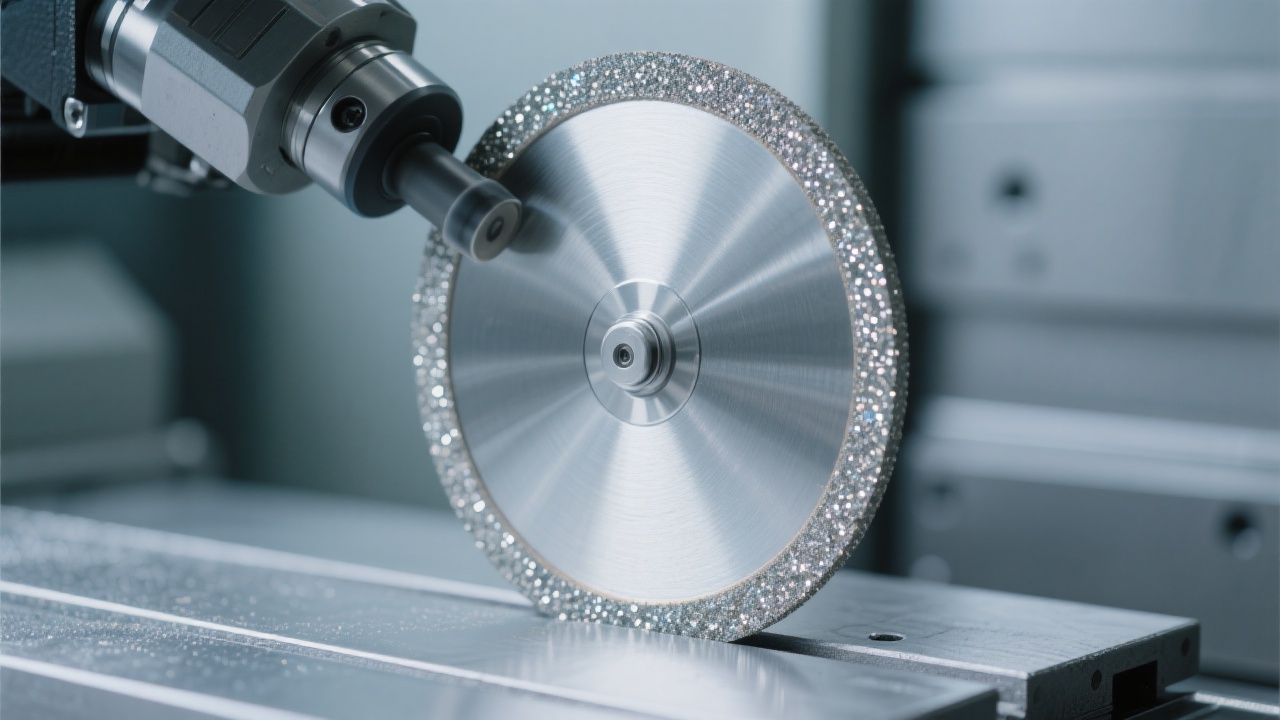
Curved surfaces introduce intermittent contact and changing pressure angles—exactly where brazed tools’ anti-impact strength becomes valuable. The trade-off is that localized load can rise sharply, causing premature diamond fracture if the operator “leans into” tight radii.
Two techniques improve stability:
- Keep the engagement constant: smoother toolpath, smaller stepovers, and no sudden direction reversals on contact.
- Manage heat at the contact patch: stronger coolant targeting and avoiding dry “touch-up” habits.
4) Common Problems and Fixes (Troubleshooting That Saves Tools)
Problem: Early Wear or “Dead” Cutting Feel
Likely causes: rubbing due to too low feed, dwell/spark-out, insufficient chip space, coolant missing the contact zone.
Fix: increase feed slightly, remove dwell, optimize coolant nozzle angle/flow, and verify wheel alignment/runout. Stable amperage is the target.
Problem: Chipping / Edge Breakage on Carbide
Likely causes: excessive downfeed, vibration, interrupted contact on sharp corners, or forcing tight-radius contact.
Fix: reduce step depth, improve fixturing rigidity, add chamfers before heavy grinding, and smooth the toolpath to keep engagement consistent.
Problem: Surface Burn / Thermal Damage
Likely causes: coolant starvation, too high surface speed for the setup, prolonged contact time, or clogged swarf.
Fix: increase coolant delivery into the cut, lower speed, shorten contact length, and keep the work area clear to prevent re-cutting hot debris.
5) Extending Tool Life and Supporting Greener Production
Brazed diamond tools align well with lean and greener manufacturing because they can reduce scrap risk from thermal defects and cut down on tool-change downtime. In many lines, fewer tool changes also means fewer setup mistakes and more consistent part quality.
A simple “smart” habit is to treat grinding like a monitored process, not a manual art: track current load, coolant condition, and cycle time. Even without full Industry 4.0 systems, a basic log can reveal where productivity is being lost—often in repeatable, fixable patterns.
Make Every Grind Safer and More Predictable
Choose Youde Brazed Diamond Tools—so every cut feels more secure, every pass stays stable, and every tool change becomes less frequent in real production.
Request a brazed diamond wheel selection for carbide grinding
Tip: sharing your material grade, removal target (mm), and coolant type is usually enough to propose a first-round spec.
Question for Your Shop
Which issue costs you more time right now—tool glazing, edge chipping, or thermal burn? If you share your workpiece material and whether you’re doing flat or contoured grinding, engineers can compare notes on what parameter change made the biggest difference.



.png?x-oss-process=image/resize,m_fill,h_300,w_300/format,webp)
.png?x-oss-process=image/resize,m_fill,h_300,w_300/format,webp)