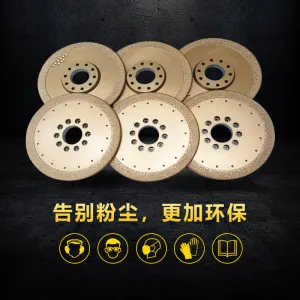
When it comes to precision grinding and cutting applications, brazed diamond grinding wheels stand out with their superior wear resistance and high impact toughness. Whether you're working on cast iron, stainless steel, ceramics, or other hard materials, knowing how to use these tools correctly can significantly increase their lifespan, improve grinding efficiency, and ensure operator safety.
Brazed diamond grinding wheels feature diamonds firmly attached to a metal core through a high-temperature brazing process. Compared to resin or electroplated wheels, they offer:
Incorrect operation can drastically reduce the lifespan of your grinding wheel. Here are typical pitfalls to avoid:
Follow these best practices to maximize your brazed diamond wheel’s effectiveness and lifespan:
RPM Guidelines for Brazed Diamond Wheels (Typical):
| Wheel Diameter (mm) | Recommended Max RPM |
|---|---|
| 100 | 30,000 |
| 150 | 20,000 |
| 200 | 15,000 |
Processing engineers on the front lines report that adhering to these guidelines lengthens wheel life by up to 30% while improving surface finish quality. For example, a casting company in Germany observed the following after switching to optimized feed rates and coolant setup with brazed diamond wheels:
Maintaining wheel integrity is a continuous effort. Key daily and weekly tasks include:

 376
|
376
|
 Brazed diamond grinding
Industrial grinding tools
High - performance grinding
Durable diamond tools
Grinding solutions
Brazed diamond grinding
Industrial grinding tools
High - performance grinding
Durable diamond tools
Grinding solutions
 438
|
Diamond abrasives export
B2B foreign trade marketing
Cross - border e - commerce conversion rate
Cast - iron processing tools
Super - hard abrasive solutions
244
|
brazed diamond grinding tools
high-intensity grinding
diamond grinding applications
wear-resistant cutting tools
industrial abrasive solutions
258
|
brazed diamond grinding wheels
industrial grinding safety
diamond grinding tool applications
superhard grinding solutions
efficient abrasive technology
280
|
brazed diamond grinding wheels
precision grinding solutions
diamond grinding tools
long-life abrasive discs
industrial grinding efficiency
438
|
Diamond abrasives export
B2B foreign trade marketing
Cross - border e - commerce conversion rate
Cast - iron processing tools
Super - hard abrasive solutions
244
|
brazed diamond grinding tools
high-intensity grinding
diamond grinding applications
wear-resistant cutting tools
industrial abrasive solutions
258
|
brazed diamond grinding wheels
industrial grinding safety
diamond grinding tool applications
superhard grinding solutions
efficient abrasive technology
280
|
brazed diamond grinding wheels
precision grinding solutions
diamond grinding tools
long-life abrasive discs
industrial grinding efficiency