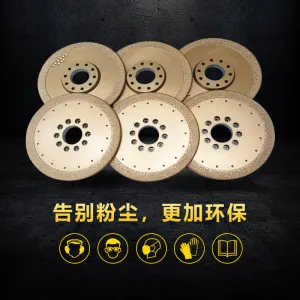
When it comes to precision machining of hard materials like gray cast iron, ductile cast iron, or stainless steel, choosing the right grinding wheel isn't just about performance—it's about safety, consistency, and long-term cost savings. In this interactive Q&A guide, we break down how brazed diamond grinding wheels outperform traditional alternatives by up to 40% in material removal rate while significantly reducing operator risk.
Unlike conventional abrasive wheels that wear quickly on hard metals, brazed diamond wheels use a high-temperature bonding process that securely attaches ultra-hard diamond particles (typically 80–120 mesh) to a steel core. This results in:
A leading German OEM switched from resin-bonded wheels to brazed diamond wheels for grinding cylinder heads made of ductile cast iron. The result? A 37% increase in throughput per shift and zero blade-related incidents over six months—a clear win for both productivity and workplace safety.
Q: How do I know which size or shape fits my application?
A: For bowl-shaped grinding tasks—like finishing brake discs or gear teeth—the standard 100mm to 200mm diameter range offers optimal balance between reach and control. Always match the wheel’s thickness (usually 3–6mm) to your machine’s spindle capacity and workpiece depth.
Q: Can these wheels be used on wet or dry processes?
A: Yes—our brazed wheels are designed for both environments. However, wet grinding extends tool life by up to 25% due to better heat dissipation and reduced dust formation, especially important in ISO-certified workshops.
Q: What makes them safer than older models?
A: The key lies in the absence of loose diamond particles. Traditional wheels can shed grit under pressure, posing inhalation risks and causing micro-chipping. Our brazed technology ensures no particle loss—even after 500+ hours of use—making it compliant with OSHA and EU PPE standards.
Whether you're processing automotive components, aerospace alloys, or industrial castings, selecting the right brazed diamond grinding wheel is one of the smartest investments you can make—not only for efficiency but also for protecting your team and equipment.

 104
|
104
|
 brazed diamond grinding wheels
industrial grinding tools
diamond abrasive technology
grinding wheel applications
export opportunities for grinding tools
290
|
Brazed diamond grinding discs
Ceramic tile processing tools
Durable diamond grinding tools
Bowl - shaped diamond grinding discs
High - efficiency grinding tools
236
|
brazed diamond grinding wheels
ceramic grinding tools
diamond grinding efficiency
high wear resistance wheels
industrial grinding solutions
brazed diamond grinding wheels
industrial grinding tools
diamond abrasive technology
grinding wheel applications
export opportunities for grinding tools
290
|
Brazed diamond grinding discs
Ceramic tile processing tools
Durable diamond grinding tools
Bowl - shaped diamond grinding discs
High - efficiency grinding tools
236
|
brazed diamond grinding wheels
ceramic grinding tools
diamond grinding efficiency
high wear resistance wheels
industrial grinding solutions
 251
|
brazed diamond grinding wheel
superhard abrasive tools
cast iron machining tools
diamond grinding discs
industrial grinding solutions
251
|
brazed diamond grinding wheel
superhard abrasive tools
cast iron machining tools
diamond grinding discs
industrial grinding solutions
 412
|
brazed diamond grinding wheels
ultra-hard diamond abrasives
machining efficiency improvement
industrial grinding tools
Yude brazing technology
412
|
brazed diamond grinding wheels
ultra-hard diamond abrasives
machining efficiency improvement
industrial grinding tools
Yude brazing technology