
If you’re an SME selling into Europe—or competing inside it—your market research plan is either a growth engine or an expensive distraction. The difference isn’t “more data.” It’s asking sharper questions, targeting the right buyers, and turning insights into concrete actions: positioning, product tweaks, pricing logic, and landing pages that convert.
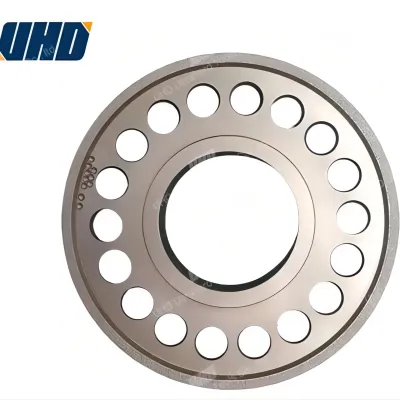
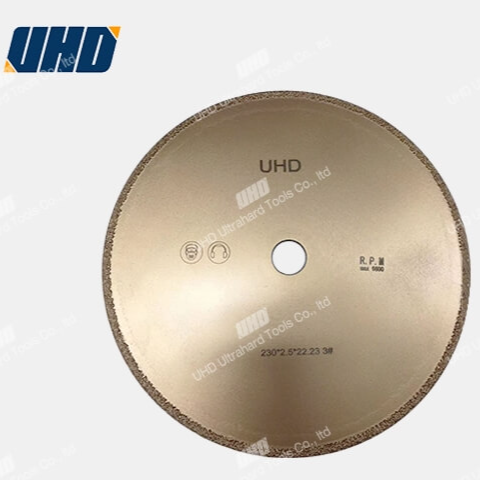
This guide walks you through a practical, end-to-end workflow—especially useful for industrial B2B products with technical buying cycles (e.g., bowl-shaped cast iron brazed diamond grinding tools) where procurement decisions are driven by performance proof, compliance, and reliability.
Many SMEs say they want to “understand the market.” That’s not a goal—it’s a wish. A strong research goal must end with a decision your team will actually make within the next 30–60 days. For Europe, where markets differ widely by language, regulations, and buying habits, you need to be brutally specific.
Expert note (practical benchmark): In B2B industrial categories, teams that define one primary decision (e.g., “Which two EU countries should we prioritize next quarter?”) typically cut research time by 30–40% and improve campaign relevance by 20%+ because questions stop being “nice to have.”
Example for abrasive tools: don’t just ask “Who buys diamond grinding tools?” Ask: Which applications are most sensitive to wheel life, surface finish, and downtime? That leads directly to product pages, test reports, and the right outreach list.

In Europe, your “customer” is rarely one person. For B2B, it’s a decision unit: production, quality, procurement, and sometimes the owner. Your research should map who triggers the search, who evaluates technical fit, and who signs the order.
Your goal is to connect segments to decision logic. For example, a distributor might accept slightly lower performance if you provide faster replenishment and consistent batch quality. A factory will likely do the opposite.
Ask: “What happens if the tool underperforms?”
Use it to: build ROI language (downtime, scrap rate, rework hours).
Ask: “What proof do you trust before switching suppliers?”
Use it to: decide between lab data, real jobsite tests, certifications, or references.
Ask: “Who must approve new suppliers?”
Use it to: design your outreach: technical sheet for QA, total cost for procurement, reliability story for management.
SMEs often rely on one channel—like a few distributor calls or a single industry report. That’s risky. Instead, combine four data sources so you can cross-check reality and avoid false conclusions.
A) Online surveys (fast validation)
Aim for 30–80 responses from your target roles. Keep it under 8 questions. Use it to quantify priorities like tool life, surface finish, delivery, and after-sales support.
B) Industry reports & associations (macro truth)
Use European and national associations to spot trends: demand shifts, regulation pressure, and technology adoption. Your goal isn’t to copy numbers—it’s to understand where buyers are heading.
C) User interviews (high-quality insight)
Do 8–12 interviews with production managers, QA, or procurement. Record patterns: switching triggers, disqualifiers, and what “reliable supplier” really means in their context.
D) Competitor comparison (positioning reality)
Compare product claims, certifications, lead times, content depth, and inquiry flow. In many EU B2B niches, competitors win simply because their technical pages answer questions faster.
Create a one-page “Research Flow” diagram: Goal → Segments → Questions → Sources → Insights → Actions → KPI. Print it. If a data point doesn’t move to “Action,” it’s noise.
Raw data is messy: different terms, incomplete answers, and mixed buyer types. If you skip cleaning, your “insights” will be inconsistent—and your marketing team will feel it immediately in low-quality inquiries.
If you can’t point to a landing page section, an email sequence, a product spec improvement, or a pricing rationale that changes because of your research—your research didn’t finish its job.
Imagine a company similar to an export-oriented superhard tool manufacturer: strong production capability, stable quality, but EU inquiries are inconsistent—too many low-fit buyers, too much “send price list” traffic, not enough technical decision-makers.
Landing page structure: they placed “application + material” selection first, then specs, then proof.
Content upgrade: added a “Choosing guide” section and a downloadable test checklist.
Lead form change: asked one qualifying question (“Material & machine type?”) to filter out non-serious traffic.
Channel shift: reduced low-intent placements and invested more in keyword groups tied to applications and pain points, not generic “diamond tool” searches.
This is the real benefit of a tight market research plan: it doesn’t just tell you what the market is—it tells you what your website and sales process should say next.
If you’re busy (and you are), run a sprint. Two weeks is enough to get directional clarity and stop wasting spend—especially when your goal is to improve conversion and lead quality.
Days 1–2: define the single decision + buyer segments + 8 core questions.
Days 3–7: conduct 4–6 interviews; launch survey; collect competitor evidence.
Days 8–10: clean data; tag by segment/role; extract repeating patterns.
Days 11–14: update positioning, landing page sections, and outreach scripts; set KPIs.
Action line you can share internally: Now is the moment to start your first research round—so every euro you spend on marketing goes where it actually converts, not where it merely “gets traffic.”

 281
|
281
|
 brazed diamond grinding tools
industrial grinding applications
diamond grinding discs
high-efficiency grinding
wear-resistant cutting tools
192
|
brazed diamond grinding discs
bowl-shaped cast iron grinding tools
superhard diamond grinding
diamond grinding efficiency
wear-resistant grinding tools
379
|
Brazed diamond grinding tools
High-strength grinding
Wear-resistant tools
Efficient metal processing
Grinding tool application cases
209
|
Brazed diamond grinding discs
Heavy-duty grinding tools
Super-hard abrasives
Industrial grinding solutions
Diamond grinding discs
396
|
brazed diamond grinding tools
high-intensity machining
durable abrasive tools
gray cast iron processing
cemented carbide grinding
brazed diamond grinding tools
industrial grinding applications
diamond grinding discs
high-efficiency grinding
wear-resistant cutting tools
192
|
brazed diamond grinding discs
bowl-shaped cast iron grinding tools
superhard diamond grinding
diamond grinding efficiency
wear-resistant grinding tools
379
|
Brazed diamond grinding tools
High-strength grinding
Wear-resistant tools
Efficient metal processing
Grinding tool application cases
209
|
Brazed diamond grinding discs
Heavy-duty grinding tools
Super-hard abrasives
Industrial grinding solutions
Diamond grinding discs
396
|
brazed diamond grinding tools
high-intensity machining
durable abrasive tools
gray cast iron processing
cemented carbide grinding







.png?x-oss-process=image/resize,m_fill,h_300,w_300/format,webp)


