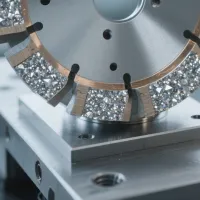
In the field of gray iron machining, the improper selection of diamond grinding discs often leads to several common problems. For example, the service life of the grinding discs is significantly shortened. On average, an inappropriately selected diamond grinding disc may only last 30 - 40% of the expected lifespan. This not only means frequent tool replacements but also affects the overall production efficiency. Additionally, the surface quality of the machined gray iron parts is often poor, with a surface roughness that can be 2 - 3 times higher than the required standard, which fails to meet the high - precision requirements of modern manufacturing.
The unique structure of gray iron, especially the presence of graphite flakes, plays a crucial role in the wear mechanism of diamond grinding discs. Graphite flakes act as "micro - crack sources" for the detachment of diamond particles. During the grinding process, the hardness difference between graphite flakes and the surrounding iron matrix causes uneven stress distribution on the surface of the grinding disc. As a result, the diamond particles are more likely to experience impact and shearing forces at the interface of graphite flakes, leading to premature detachment. An industry expert once said, "Understanding the gray iron's internal structure is the first step in correctly selecting diamond grinding discs."
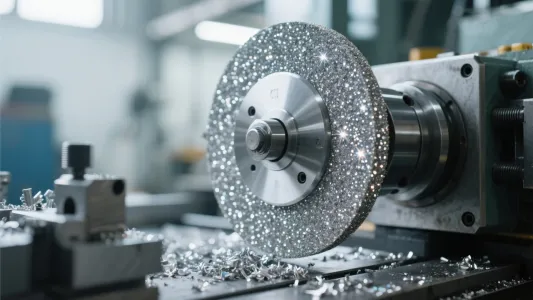
The brazing process is a game - changer in enhancing the performance of diamond grinding discs. UHD, a leading company in the field of super - hard material tools, uses high - tech brazing technology. This process significantly improves the bonding strength between diamond particles and the substrate. Compared with traditional bonding methods, the brazed grinding discs have a 60 - 70% higher bonding strength, which greatly enhances their shock resistance. In addition, the high - temperature and pressure - resistant brazing layer can withstand the harsh friction and impact during the grinding process, effectively extending the overall durability of the grinding disc. The grinding discs can maintain stable performance under complex working conditions, such as high - speed grinding and heavy - load machining.
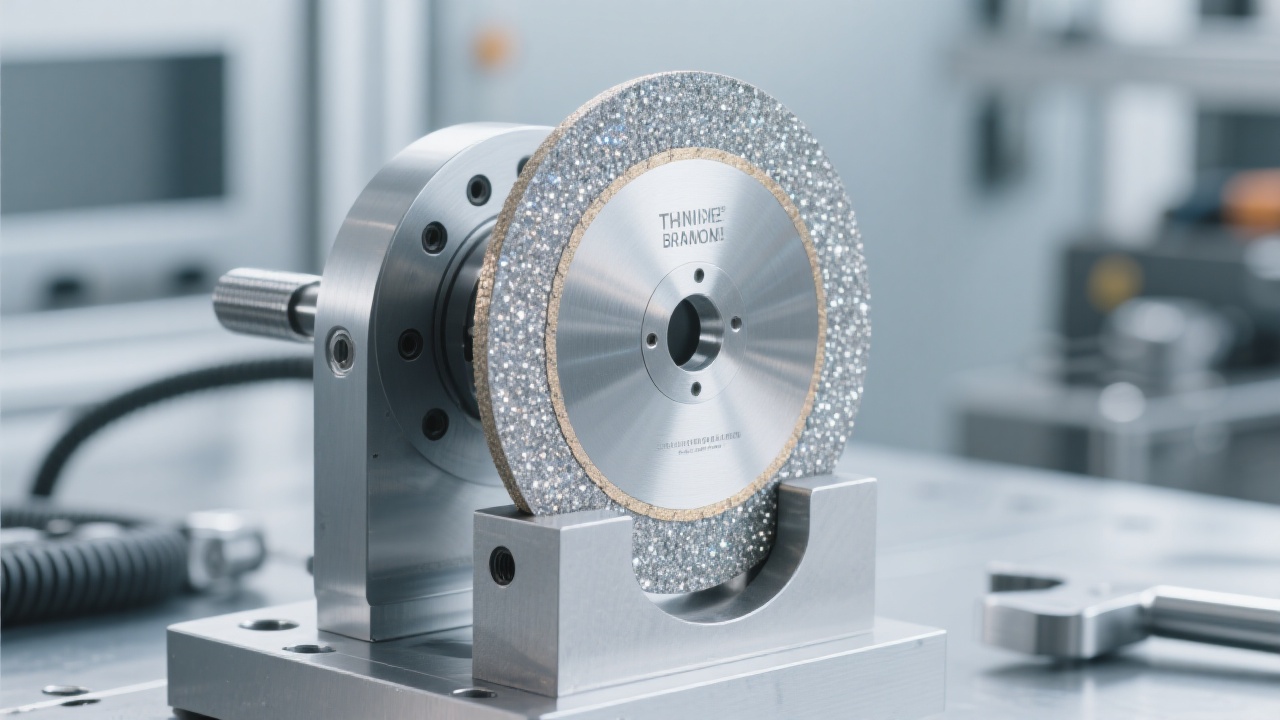
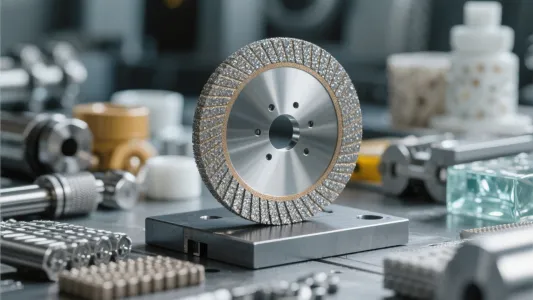
There are significant differences between high - speed steel and cemented carbide substrates. In terms of thermal expansion coefficient, high - speed steel has a relatively high coefficient, which means it expands more significantly under high - temperature conditions. This may cause the diamond particles to loosen due to the inconsistent expansion of the substrate. On the contrary, cemented carbide has a relatively low thermal expansion coefficient, providing a more stable support for diamond particles. In addition, high - speed steel has better toughness, which is suitable for some applications with high - impact requirements. Cemented carbide, on the other hand, is more suitable for high - precision and high - hardness grinding due to its high hardness. For example, in the automotive parts manufacturing industry, high - speed steel substrates may be more suitable for rough grinding operations, while cemented carbide substrates are preferred for finishing operations.
Let's take a look at two real - world cases. An automotive parts factory initially used diamond grinding discs with an inappropriate substrate material. The grinding efficiency was extremely low, with only 50 - 60 parts being processed per hour, and the tool needed to be replaced every 2 - 3 days. After switching to UHD's grinding discs using the appropriate substrate and brazing process, the processing efficiency increased to 80 - 90 parts per hour, and the tool life was extended to 10 - 12 days. In a mold manufacturing company, the wrong selection of grinding discs led to poor surface quality of the molds, resulting in a high rejection rate of up to 15 - 20%. After adopting the optimized selection method, the rejection rate was reduced to 3 - 5%, significantly improving the production efficiency and reducing costs.
To help you make more scientific decisions, we propose a three - step selection method. First, evaluate the working conditions, including the hardness of the gray iron, the grinding speed, and the load. Second, match the substrate material according to the evaluation results. If the working conditions require high toughness, high - speed steel may be a good choice; if high - precision and high - hardness grinding are needed, cemented carbide is more suitable. Finally, verify the quality of the brazing process. A high - quality brazing layer can ensure the long - term stability and performance of the grinding disc.
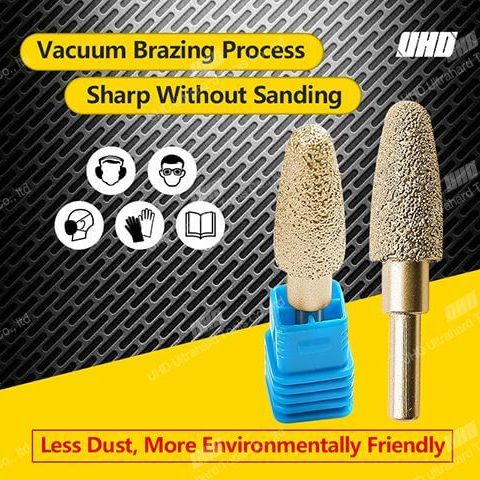
In the era of intelligent manufacturing, it is crucial to establish a systematic management concept. Regularly detecting the wear of grinding discs and carrying out preventive maintenance can effectively avoid production interruptions caused by tool failure. For example, conducting a detailed inspection of grinding discs every week and replacing the worn - out parts in time can ensure the continuous and stable operation of the production line.
 439
|
439
|
 brazed diamond grinding tools
high-intensity grinding
diamond brazing technology
wear-resistant grinding tools
superhard abrasives
brazed diamond grinding tools
high-intensity grinding
diamond brazing technology
wear-resistant grinding tools
superhard abrasives
 82
|
brazed diamond grinding disc
stone cutting efficiency
diamond grinding wheel
industrial grinding tools
wear-resistant grinding plate
82
|
brazed diamond grinding disc
stone cutting efficiency
diamond grinding wheel
industrial grinding tools
wear-resistant grinding plate
 472
|
Curved profile brazed diamond grinding disc
Gray iron processing efficiency improvement
Stainless steel grinding solution
Super-hard diamond grinding disc
High-efficiency grinding tool
472
|
Curved profile brazed diamond grinding disc
Gray iron processing efficiency improvement
Stainless steel grinding solution
Super-hard diamond grinding disc
High-efficiency grinding tool
 165
|
Brazed Diamond Grinding 100
high-strength grinding tool
diamond grinding technology
superhard tool application
wear-resistant grinding disc
165
|
Brazed Diamond Grinding 100
high-strength grinding tool
diamond grinding technology
superhard tool application
wear-resistant grinding disc
 48
|
180mm diameter brazed diamond abrasives
cemented carbide machining abrasives
high - standard brazed diamond abrasives
diamond abrasive performance optimization
high - efficiency grinding tools
48
|
180mm diameter brazed diamond abrasives
cemented carbide machining abrasives
high - standard brazed diamond abrasives
diamond abrasive performance optimization
high - efficiency grinding tools





.png?x-oss-process=image/resize,m_fill,h_300,w_300/format,webp)
.png?x-oss-process=image/resize,m_fill,h_300,w_300/format,webp)


.png?x-oss-process=image/resize,m_fill,h_200,w_200/format,webp)