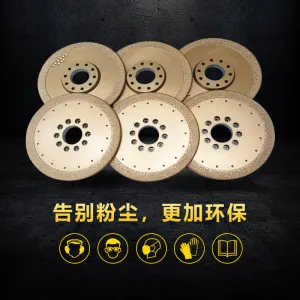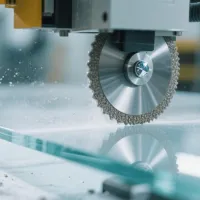
When it comes to machining stainless steel, cast iron, and composites, the physical properties of these materials significantly influence the selection of diamond particle size and concentration in curved brazed diamond abrasive discs. For instance, stainless steel has high toughness, which requires a larger diamond particle size (e.g., 80 - 120 mesh) and a relatively lower concentration (around 40 - 60%) to ensure efficient cutting and prevent clogging. In contrast, cast iron has lower toughness but higher hardness, so a smaller diamond particle size (120 - 180 mesh) and a higher concentration (60 - 80%) are more suitable for achieving a smooth surface finish. Composites, with their unique structure, demand a careful balance of particle size and concentration based on the type of fibers and matrix materials.
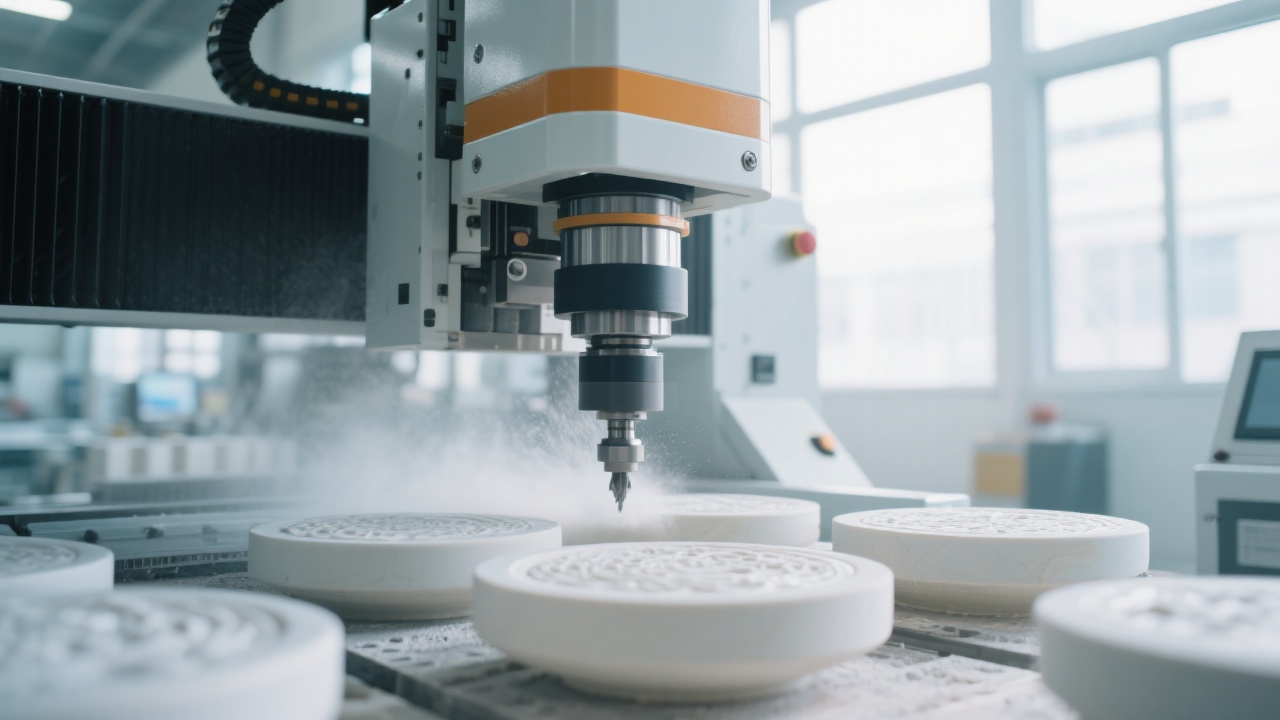
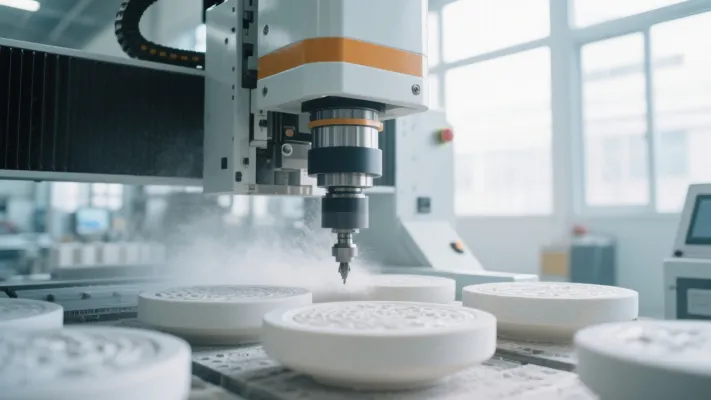
UHD's diamond abrasive discs are designed with a deep understanding of these material - specific requirements. By choosing the appropriate particle size and concentration, users can expect to see a significant improvement in grinding efficiency, up to 30% in some cases, compared to using a one - size - fits - all approach.
Different bond types, such as copper - based and nickel - based bonds, have distinct characteristics in terms of stability and wear resistance at high temperatures. Copper - based bonds offer good thermal conductivity, which helps to dissipate heat during grinding, reducing the risk of thermal damage to the workpiece. However, they may have relatively lower wear resistance. Nickel - based bonds, on the other hand, are known for their high wear resistance, but they may generate more heat during the grinding process.
According to a study by industry experts, in high - precision grinding applications, using a nickel - based bond can increase the service life of the abrasive disc by up to 50% compared to a copper - based bond. But in applications where heat control is crucial, a copper - based bond might be the better choice. UHD offers both types of bonds in its product line, allowing users to select the most suitable one according to their specific needs.
For different application scenarios, such as high - precision curved surface machining, mass production, and difficult - to - machine materials, specific selection strategies are required. In high - precision curved surface machining, a smaller diamond particle size and a more uniform distribution are needed to ensure a smooth and accurate surface finish. For mass production, an abrasive disc with high durability and consistent performance is preferred to reduce the frequency of disc replacement and increase overall productivity. When dealing with difficult - to - machine materials, such as some high - strength composites, a stronger bond and a larger diamond particle size may be necessary.
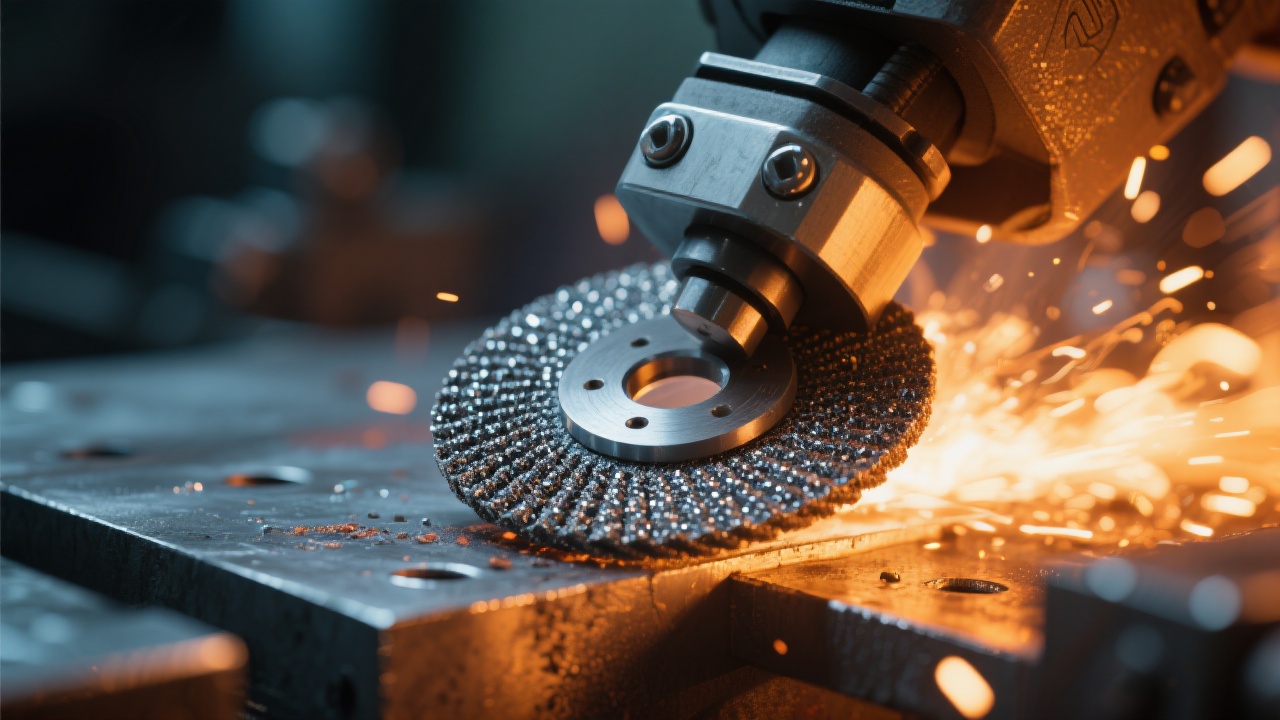
UHD has developed a comprehensive selection logic table (as shown in the figure below) to help technicians and production managers make the right choices. By following this table, users can reduce non - planned downtime risks by more than 50% and improve equipment utilization and product consistency.
Regular maintenance of curved brazed diamond abrasive discs is essential for ensuring their performance and longevity. This includes cleaning grinding residues regularly to prevent clogging, which can reduce grinding efficiency and cause uneven wear. A simple inspection method for flatness can be carried out using a straightedge, and any deviation should be corrected promptly. Controlling thermal deformation is also crucial, especially in high - speed grinding operations. By using appropriate cooling fluids and controlling the grinding speed, thermal deformation can be minimized.
Based on UHD's field experience, proper maintenance can extend the service life of an abrasive disc by up to 70%, significantly reducing the cost per unit of production. Additionally, implementing a life management system can help users accurately predict the replacement time of the abrasive disc, avoiding unexpected failures.
Front - line technicians have summarized valuable experience in terms of failure warning signs, replacement point judgment criteria, and cost - benefit optimization plans. For example, if the grinding force suddenly increases or the surface finish quality deteriorates, these may be signs of approaching abrasive disc failure. By establishing clear replacement point judgment criteria, such as a certain amount of wear or a specific reduction in grinding efficiency, users can ensure product quality and production efficiency.
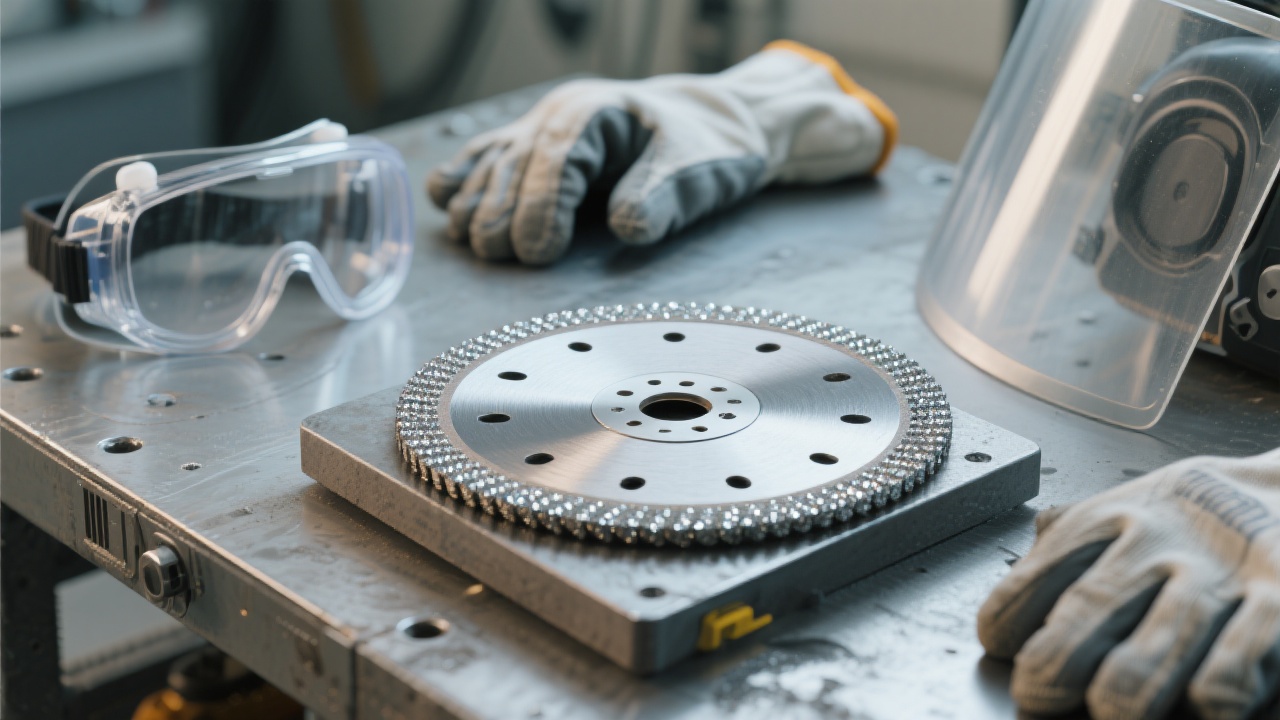
UHD's commitment to providing high - quality products and sharing practical experience has earned the trust of many users in the metal cutting field. If you want to learn more about how UHD's diamond abrasive discs can transform your production process and enhance efficiency, click here to explore our solutions.
 337
|
337
|
 European SME market research
market research plan
B2B customer segmentation Europe
competitor analysis framework
market research tools
European SME market research
market research plan
B2B customer segmentation Europe
competitor analysis framework
market research tools
 212
|
Brazed diamond grinding wheel
Brazing technology
Curved profile design
Grinding efficiency
Wear resistance
212
|
Brazed diamond grinding wheel
Brazing technology
Curved profile design
Grinding efficiency
Wear resistance
 463
|
brazed diamond grinding disk
curved profile grinding disk
ultra-hard diamond grinding disk
brazing technology grinding disk
grinding disk wear resistance
463
|
brazed diamond grinding disk
curved profile grinding disk
ultra-hard diamond grinding disk
brazing technology grinding disk
grinding disk wear resistance
.png?x-oss-process=image/resize,h_300,m_lfit/format,webp) 91
|
Brazed diamond abrasive selection
Carbide grinding solutions
Ceramic - specific grinding discs
Diamond abrasive parameter matching
High - efficiency grinding tools
91
|
Brazed diamond abrasive selection
Carbide grinding solutions
Ceramic - specific grinding discs
Diamond abrasive parameter matching
High - efficiency grinding tools
 292
|
180mm brazed diamond abrasives
hard alloy processing abrasives
high - standard brazed diamond abrasives
diamond abrasive performance
super - hard abrasive application tutorial
292
|
180mm brazed diamond abrasives
hard alloy processing abrasives
high - standard brazed diamond abrasives
diamond abrasive performance
super - hard abrasive application tutorial